
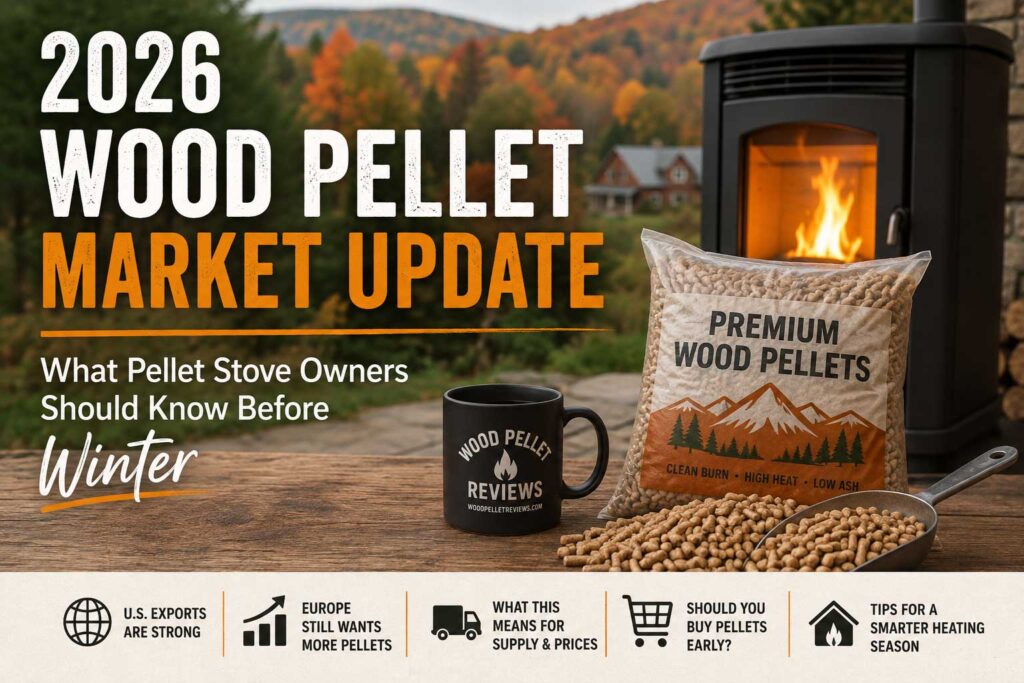
If you burn wood pellets, this is about the time of year when you start wondering the same things every season: Are pellet prices going up? Are there going to be shortages? Should I buy now or wait? And what is actually happening in the pellet industry this year?
So I did some digging into what is happening in the wood pellet market in 2026.
The short version is this: I am not seeing evidence of some giant nationwide pellet shortage coming this winter. But there are some pretty interesting things happening behind the scenes that could affect pellet pricing, availability and which brands you actually see at your local dealer.
U.S. Wood Pellet Exports Are Still Huge
One thing that always surprises people is just how many wood pellets the United States ships overseas.
The U.S. exported more than 10 million metric tons of wood pellets in 2025, and exports have remained strong in 2026. In January alone, the U.S. exported nearly 965,000 metric tons. Then in March, exports jumped to more than 1.1 million metric tons, compared with about 782,000 metric tons in March of 2025.
That is a lot of pellets, and the United Kingdom continues to be the biggest customer for U.S.-made wood pellets.
Now, before everyone runs out and buys 10 tons because they think Europe is stealing all of our pellets, there is an important distinction. Most of the pellets being exported overseas are industrial-grade utility pellets used by large power plants. They are not necessarily the same premium bagged pellets you are throwing into your Harman or Quadra-Fire every night.
So no, a million tons leaving a port does not mean your local dealer is suddenly going to run out of Barefoots. But it does show just how large the pellet industry has become.
The U.K. Is Still Buying an Incredible Amount of American Pellets
The United Kingdom has become one of the largest pellet markets in the world because converted power plants burn biomass to generate electricity.
According to USDA research, the United States supplied roughly 76% of the U.K.’s imported wood pellets in 2024. That relationship has become a massive part of the U.S. pellet industry.
For a little perspective, wood pellets accounted for only about 1.6% of U.S. forest-product exports before 2010. By 2024, they accounted for nearly 20%.
That is a pretty incredible change for an industry that most homeowners still think of as bags stacked outside the local hardware store.
Industrial Pellets and Heating Pellets Are Two Different Markets
This is something I think gets lost whenever we talk about pellet production numbers.
The U.S. Energy Information Administration separates production between utility pellets and the premium or standard pellets commonly used for residential heating. In one recent monthly report, U.S. producers manufactured roughly 930,000 tons of densified biomass fuel, but only about 124,000 tons were heating pellets. The rest were primarily utility pellets.
So when you hear that the United States is producing or exporting enormous amounts of pellets, keep that difference in mind. The pellet market that matters to someone heating a house in New Hampshire, Maine, Vermont or Massachusetts is much smaller than the overall industrial biomass market.
Europe Could Still Affect the Market
There is another issue developing this year that is worth watching.
Europe has been tightening rules surrounding where wood products come from and how that material is traced through the supply chain. The European Union Deforestation Regulation, commonly called EUDR, creates much stricter traceability requirements for products like wood pellets.
A 2026 U.S. Forest Service study modeled what could happen as those rules take effect. The researchers concluded that the regulations could significantly change where pellets are shipped around the world. Under some scenarios, U.S. pellet exports to Europe could decline substantially while pellets get redirected into other international markets.
Will that change the price of a bag of pellets at Tractor Supply this winter? Probably not directly.
But over time, these types of trade changes can influence where pellet mills sell their product, where new plants are built and how much production remains focused on residential heating. That is something worth keeping an eye on.
So Are We Going to Have a Pellet Shortage This Winter?
Right now, I don’t see anything that makes me think we are heading toward a widespread pellet shortage for the 2026–2027 heating season.
Could individual dealers run out of certain brands? Absolutely. That happens every winter.
Once we get a week of brutal January temperatures, everyone suddenly remembers they need pellets at the same time. A dealer might have plenty of pellets overall but run out of the exact brand you like.
That is very different from an actual national pellet shortage.
Should You Buy Your Pellets Early?
I have always been a fan of buying early if you already know what you like to burn. Not because I think the pellet apocalypse is coming. It is just easier.
You usually have:
- Better brand selection
- More time to compare prices
- Less chance of scrambling during a cold snap
- A better chance of getting delivery when you actually want it
- Time to try a few bags before committing to several tons
If you find a pellet your stove likes and the price is reasonable, there is nothing wrong with getting ahead of the heating season.
Especially here in New England. We all know how quickly October can turn into January.
Price Still Isn’t Everything
This is also the point in the season where people start posting pictures of pellet prices online.
“$299 a ton!”
“$359 a ton!”
“$7.99 a bag!”
But price by itself still doesn’t tell you whether you’re getting a good pellet.
A cheaper pellet that produces twice the ash, clogs the burn pot and forces you to clean the stove every three days isn’t necessarily cheaper in the long run. And an expensive pellet isn’t automatically great either.
That is exactly why WoodPelletReviews.com exists.
I want to know:
- How much heat are they putting out?
- How much ash are they producing?
- Are there excessive fines in the bag?
- Are the pellets consistent from year to year?
- Where are they actually being manufactured?
- And most importantly, how are they burning in real people’s stoves?
What We Will Be Watching This Heating Season
As we head into the 2026–2027 pellet season, I will be watching a few things closely:
- Local pellet prices
- Which brands are showing up at dealers around New England
- Any mills changing ownership or production
- New pellet brands entering the market
- Regional shortages
- What everyone here is actually burning
WoodPelletReviews.com is getting rebuilt around that idea again: real pellet information, real experiences, and hopefully a little less guessing when you’re standing in front of a pallet wondering whether those $7 bags are actually worth buying.
If you start seeing 2026 pellet prices or new brands showing up near you, let us know. And if you’ve burned them, leave a review.
The more information we all share, the easier it becomes to figure out what is actually worth putting in the stove.